Blind Test: Intel In 2025 Year In vs Meta Ray Ban Display - Which is Actually Better?
Category: Laptops
Introduction
The past few years have blurred the lines between traditional laptops and wearable displays. Intel’s "In 2025 Year In" (hereafter referred to as the Intel In) presents itself as a modern laptop-category contender focused on balanced performance and productivity. The Meta Ray-Ban Display (hereafter referred to as the Ray-Ban Display) brings augmented-reality-inspired heads-up interaction to a familiar eyewear form factor. On paper they serve different use cases, but many buyers today weigh them against each other because both promise to change how people work, communicate, and consume information on the go.
This article runs a practical, real-world blind test comparison between the two: how they perform in everyday tasks, what buyers typically care about, and which product type ends up being the better choice for specific audiences. The aim is to cut past marketing and evaluate ergonomics, workflow fit, battery considerations, software friction, privacy implications, and overall value.
How the comparison was structured
The blind test focuses on typical buyer scenarios: productivity (document editing, spreadsheets, web research), creative work (photo touch-ups, note-taking), communication (video calls, messaging), mobility (commuting, travel), and ambient use (notifications, quick references). The evaluation emphasizes subjective ergonomics as well as objective fit-for-purpose behavior: which device reduces friction and improves outcomes for a given task.
Product review and analysis
Intel In 2025 Year In — what it is and who it's for
The Intel In positions itself as a contemporary laptop-class device optimized for balanced everyday computing. It targets people who depend on keyboard-driven workflows: writers, analysts, students, and knowledge workers who need sustained productivity, full web browsing sessions, and multitasking with multiple windows. The device' strengths are continuity with familiar laptop ergonomics: a physical keyboard, windowed multitasking, a conventional pointer, and a full operating system that supports desktop-grade applications and developer tools.
From a buyer's perspective, the advantages of a laptop like the Intel In are clear: predictable performance for long editing sessions, easy file management, and compatibility with a vast library of software. Real-world use cases where it shines include drafting long documents, building presentations, tab-heavy research, and running local development tools or virtual machines. It also accommodates peripheral workflows — external monitors, docks, and wired networking — which matter for users anchoring themselves at desks or hybrid offices.
Intel’s design emphasis typically favors performance-per-watt improvements, smarter thermal paths, and better battery life under mixed loads. In practice, that translates to fewer surprises during long workdays and more reliable multitasking when users switch between heavy and light tasks.
Meta Ray-Ban Display — what it is and who it's for
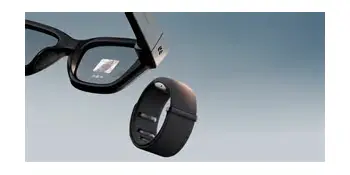
The Ray-Ban Display follows the wearable display paradigm: a lightweight, glasses-like device that overlays contextual information into the wearer’s field of view. It is intended for users who prioritize mobility and hands-free access: commuters, field workers, fitness enthusiasts, and anyone who wants low-friction glanceable interactions. Where a laptop demands a surface and posture, the Ray-Ban Display integrates with normal movement patterns and social interactions.
Use cases that benefit from a wearable display include navigation while walking or cycling, instant reference to notifications without removing a phone, quick camera capture and sharing, and hands-free voice commands. For people whose workflow involves frequent interruptions or short tasks, the wearable reduces interaction overhead: a micro-interaction that would take 30 seconds on a laptop can take 3–5 seconds when delivered through a heads-up display.
However, the Ray-Ban Display is not a direct replacement for full productivity tasks. It excels at glanceable information and context-specific overlays but relies on companion devices for large-screen content creation, complex spreadsheets, and prolonged typing. Integration with mobile ecosystems and cloud-based services is critical; effectiveness depends on software maturity and the availability of apps that minimize friction between wearable and primary device.
Looking for the best Laptops & Computers deals on Amazon?
View Offers →Pros & Cons
Intel In 2025 Year In — Pros & Cons
- Pros:
- Familiar laptop ergonomics — full keyboard and precise pointing for long-form productivity.
- Broad software compatibility for desktop-grade applications and development tools.
- Better multitasking and window management for complex workflows.
- Expandable connectivity for docks, external displays, and physical ports.
- Predictable thermal management for sustained performance.
- Cons:
- Less convenient for quick glanceable tasks while moving.
- Heavier and bulkier than wearable alternatives; less comfortable for long commutes.
- Requires a flat surface and sitting posture for best ergonomics.
Meta Ray-Ban Display — Pros & Cons
- Pros:
- Hands-free, glanceable notifications and contextual information while mobile.
- Lightweight and socially acceptable form-factor — looks like normal eyewear.
- Good for navigation, quick captures, and short interactions.
- Reduces friction for micro-tasks that interrupt workflow.
- Cons:
- Limited for sustained productivity tasks that require precise input or large screen area.
- Relies on companion devices and apps — effectiveness varies with ecosystem maturity.
- Battery life may be limited under continuous use; recharging cadence matters.
- Privacy and social acceptance concerns persist in some contexts.
Comparison table
| Metric | Intel In 2025 Year In | Meta Ray-Ban Display |
|---|---|---|
| Form factor | Traditional clamshell laptop; keyboard and trackpad | Eyewear with heads-up display; hands-free |
| Primary use | Productivity, content creation, multitasking | Glanceable information, navigation, lightweight communication |
| Input method | Physical keyboard, trackpad, external peripherals | Voice, gestures, companion smartphone controls |
| Display type | High-resolution built-in screen; windowed apps | Augmented overlay; limited rendering area suited for micro-content |
| Battery life (typical) | Optimized for multi-hour to full-day mixed use | Designed for day-to-day glanceable use; shorter continuous heavy-use duration |
| Software ecosystem | Desktop OS with large app library | Mobile-centric ecosystem with companion apps and cloud services |
| Privacy & social considerations | Standard laptop privacy model; visible when in use | Higher curiosity and privacy scrutiny in public settings |
| Portability | Portable but bulkier; fits in backpacks and briefcases | Ultra-portable — worn on the face, always with the user |
| Best for | Knowledge workers, students, creators | Commuters, hands-free workers, on-the-go micro-interactions |
Real-world scenarios and usability considerations
Scenario 1: A day of mixed work — meetings, writing, and research
In a typical hybrid workday, users alternate between video calls, writing long-form documents, and collecting reference material. The Intel In's advantage is clear: it supports meeting software, long typing sessions, and tab-heavy research without constant friction. While a wearable can surface notifications and short notes, moving back and forth between a Ray-Ban Display and a phone for composing or editing would add overhead. For knowledge workers who need deep focus and long sessions, the laptop remains the primary tool.
Scenario 2: A commuter’s day — navigation, messages, and quick captures
For commuters who need to navigate, glance at messages, and capture moments without stopping, the Ray-Ban Display shines. Hands-free navigation that preserves sightlines and quick access to directions or message previews reduces cognitive load. In this scenario, the laptop cannot compete because it requires a deliberate setup and is not practical while walking or cycling.
Scenario 3: Fieldwork and hands-on tasks
Workers in maintenance, logistics, or healthcare often need hands-free access to checklists, instructions, or remote guidance. A wearable display that integrates with remote assistance apps can overlay steps within sight. The laptop has limited utility in these contexts unless tethered to a cart or fixed workstation. The Ray-Ban Display's hands-free model reduces interruptions and keeps both hands available for physical tasks.
Buying guide — what to consider when choosing between a laptop-class device and a wearable display
Choosing between a laptop-like device such as the Intel In and a wearable display like the Ray-Ban Display depends on priorities. The following checklist helps align choice to real-world needs.
1. Primary tasks and workflow
Ask what percentage of time is spent on deep work (long-form writing, coding, detailed spreadsheets) versus micro-tasks (navigation, quick replies, glanceable notifications). If deep work exceeds occasional micro-interactions, a laptop-centric device is a better fit. If most interactions are short and mobile, a wearable improves flow.
2. Input preferences
If a physical keyboard and precision pointing matter, prioritize the laptop. If voice and short gestures suffice — and the user prefers minimal friction — a wearable may be preferable. Consider whether the wearable supports comfortable text entry via voice-to-text or companion device pairing.
3. Battery and daily cadence
Evaluate how devices will be charged during a normal day. Laptops tend to support all-day mixed usage; wearables may need more frequent top-ups depending on continuous use and always-on sensors. Determine whether the user can conveniently recharge mid-day.
4. Software ecosystem and compatibility
Review whether essential apps and services are supported. Laptops benefit from wide compatibility; wearables are constrained by what apps are adapted for glanceable displays. Prioritize devices that integrate smoothly with calendars, cloud storage, and communication platforms the user already relies on.
5. Privacy and social comfort
Consider social contexts. In meetings or public spaces, wearables can draw attention or trigger privacy concerns. Laptops are more socially accepted for visible work. If discretion matters, test how a wearable is perceived in typical environments.
Shop the latest Laptops & Computers picks on Amazon.
Browse Now →6. Portability vs. capability trade-off
Wearables win on convenience and weight, but that convenience comes with capability trade-offs. If the user values uninterrupted mobility above raw compute capability, a wearable is compelling. If capability and flexibility are essential, choose the laptop.
7. Budget and total ecosystem cost
Compare not only the sticker price but the ecosystem costs: companion device dependencies, accessories (docks, chargers, cases), and potential app subscriptions. Determine whether the wearable requires a specific phone or OS for full functionality and whether the laptop supports necessary enterprise integrations.
Practical tips for trying before buying
- Test a full day with each device in realistic conditions: commute, meetings, and desk sessions.
- For wearables: practice voice input in noisy environments and check how well the system handles accents and ambient noise.
- For laptops: assess comfort during prolonged typing and whether thermals affect lap usage.
- Evaluate how each device fits into existing habits: does the wearable reduce phone pickups or just add another screen to check?
- Check repairability and service options for both form factors — a field-repairable laptop can be more economical long term than sealed wearables.
Final verdict — which is actually better?
There is no single "better" choice that applies to everyone. The Intel In and the Meta Ray-Ban Display serve overlapping but ultimately distinct needs. The blind test clarifies that the best device is the one that reduces friction for the user's most frequent tasks.
For users whose days are dominated by sustained productivity — writing, coding, spreadsheet work, running desktop-class applications — the Intel In remains the stronger choice. It preserves the familiarity and capability of a laptop while offering predictable performance and richer input options. The laptop is the practical workhorse for knowledge-based work.
For users who prioritize always-available, hands-free access to contextual information during movement or hands-on tasks, the Ray-Ban Display adds measurable convenience. It shortens the time to access micro-interactions and can enhance safety and convenience for navigation and fieldwork. However, it should be seen as a complement to, not a replacement for, a laptop when serious productivity is required.
In short, the Intel In is better for depth; the Ray-Ban Display is better for mobility. Buyers should choose based on which dimension—depth or mobility—dominates their daily routine.
Conclusion
The modern digital toolkit benefits from both form factors: a laptop for concentrated, complex work and a wearable for instantaneous, mobile interactions. The blind test highlights that neither device makes the other obsolete. Instead, they can be complementary: the Intel In provides the environment for creating and editing, while the Ray-Ban Display offers a friction-free window for timely context when away from a desk.
Ultimately, the most valuable device is the one that reduces the user's daily friction the most. Prospective buyers should map their typical day, test both options in situ when possible, and favor the device that aligns with their workflow priorities, privacy comfort, and software needs.